Understanding Thalassemia
Knowledge is the first step toward prevention and better care. Learn about this genetic blood disorder, its impact, and how we can work together to reduce its prevalence in Pakistan.
What is Thalassemia?
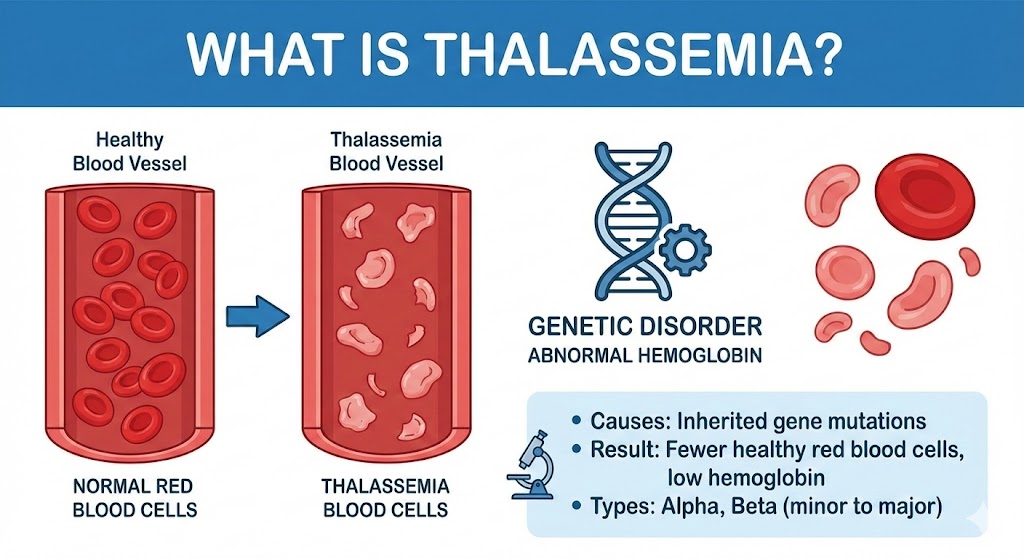
Thalassemia is an inherited blood disorder that affects the body's ability to produce hemoglobin and healthy red blood cells. Hemoglobin is the protein in red blood cells responsible for carrying oxygen throughout the body.
In people with thalassemia, the hemoglobin is either abnormally formed or produced in inadequate amounts. This results in anemia — a shortage of red blood cells that can cause fatigue, weakness, and other serious health complications if left untreated.
Thalassemia is caused by mutations in the DNA of cells that make hemoglobin. The mutations are passed from parents to children. If both parents carry the thalassemia gene, their children have a 25% chance of being born with thalassemia major.
Types of Thalassemia
One defective gene. Usually no symptoms; can pass gene to children.
Two defective genes with moderate symptoms. May need occasional transfusions.
Two defective genes with severe symptoms. Requires regular lifelong transfusions.
Signs & Symptoms
Symptoms typically appear within the first two years of life in children with thalassemia major. Early recognition is crucial for timely treatment.
Fatigue & Weakness
Persistent tiredness due to low hemoglobin levels affecting oxygen delivery to tissues.
Pale or Yellowish Skin
Pallor or jaundice caused by anemia and breakdown of abnormal red blood cells.
Slow Growth
Delayed growth and development in children due to chronic anemia.
Bone Deformities
Facial bone changes as the body tries to produce more blood cells in bone marrow.
Enlarged Spleen
Splenomegaly from filtering abnormal red blood cells.
Dark Urine
Caused by rapid breakdown of red blood cells releasing hemoglobin.
When to See a Doctor
If your child shows signs of severe fatigue, pale skin, poor appetite, or slow growth, consult a healthcare provider immediately. Early diagnosis and treatment significantly improve outcomes.
Treatment Approaches
While thalassemia is a lifelong condition, effective treatments are available to manage symptoms and improve quality of life.
Blood Transfusions
Every 2-4 weeksRegular transfusions every 2-4 weeks to maintain healthy hemoglobin levels and prevent complications from severe anemia.
Iron Chelation Therapy
Daily medicationMedication to remove excess iron from the body, preventing organ damage caused by iron overload from repeated transfusions.
Bone Marrow Transplant
One-time procedureThe only cure for thalassemia. Replacing diseased bone marrow with healthy donor cells can lead to a transfusion-free life.
Gene Therapy
ExperimentalEmerging treatment that modifies patient's own cells to produce healthy hemoglobin. Still in clinical trials but showing promise.
At H2F, we provide all these treatments free of cost to eligible patients.
Explore Our ServicesPreventing Thalassemia in Future Generations
While we cannot yet cure thalassemia in all patients, we can prevent new cases through awareness and screening programs.
Pre-Marital Screening
Testing both partners before marriage to identify carrier status and understand the risk of having affected children.
Genetic Counseling
Professional guidance for at-risk couples about inheritance patterns, testing options, and family planning decisions.
Prenatal Testing
Chorionic villus sampling (CVS) or amniocentesis during pregnancy to determine if the baby is affected.
Public Awareness
Community education about thalassemia, its inheritance, and the importance of screening to reduce disease prevalence.
If you or your partner have a family history of thalassemia, or belong to a high-risk population, get tested.
Learn About Genetic CounselingThalassemia in Pakistan
Pakistan faces a significant burden of thalassemia, making awareness and prevention crucial.
5-8%
of Pakistan's population are carriers
5,000-9,000
children born with thalassemia major annually
100,000+
people living with thalassemia in Pakistan
Why is Thalassemia Common in Pakistan?
- Consanguineous marriages: High rates of cousin marriages increase the chance of both parents being carriers.
- Limited screening: Lack of mandatory pre-marital screening programs in most regions.
- Low awareness: Many carriers don't know their status due to lack of education about the condition.
Frequently Asked Questions
Find answers to the most common questions about thalassemia.
Have more questions? We're here to help.
Contact UsHelp Us Fight Thalassemia
Your support enables us to provide free treatment, spread awareness, and work toward a thalassemia-free Pakistan.